
Searching Dane County Civil Dockets
Wisconsin Circuit Court Access, or WCCA, is where most people begin. Pick Dane County, then search by party name or case number. The class code and filing date help you tell similar matters apart. WCCA spans the whole circuit court docket. Civil, family, paternity, probate, and small claims all appear there. Public access varies by class.
Missing an image or a specific paper? Turn to the Dane County Record Center. The clerk's counter takes requests in person, and mail works too. The form asks for the case number and party names. It also wants a document description, certification choice, delivery method, and date range. A public terminal at the courthouse offers court records as well. Call the clerk if the class or form confuses you.
- Open WCCA and accept the access notice.
- Select Dane County and enter a narrow name or case number.
- Match the class, filing date, and party role.
- Read events from filing through the latest status or judgment.
- Request the named document or certified copy from the clerk.
Dane County Civil Docket Codes
Every Dane civil docket carries a two-letter class. CV usually means civil, SC small claims, FA family, and PR probate. Broad labels only go so far. The Wisconsin case-classification tables list the precise numeric filing types circuit courts use.
A few examples show the detail. Money judgment is 30301, mortgage foreclosure is 30404, municipal-judgment appeal is 30601, and injunction is 30704. Small claims keeps its own codes for money claims, eviction, replevin, and garnishment. Family, probate, guardianship, commitment, adoption, and termination of parental rights each carry distinct codes. Access concerns differ too.
- CV
- General civil case class.
- SC
- Small-claims circuit case.
- FA
- Family or divorce-related class.
- PR
- Probate case class.
- Replevin
- A claim seeking the return of personal property.
The official classification listing shows why a short label deserves a check against the full filing type.
View Wisconsin's official case-classification source.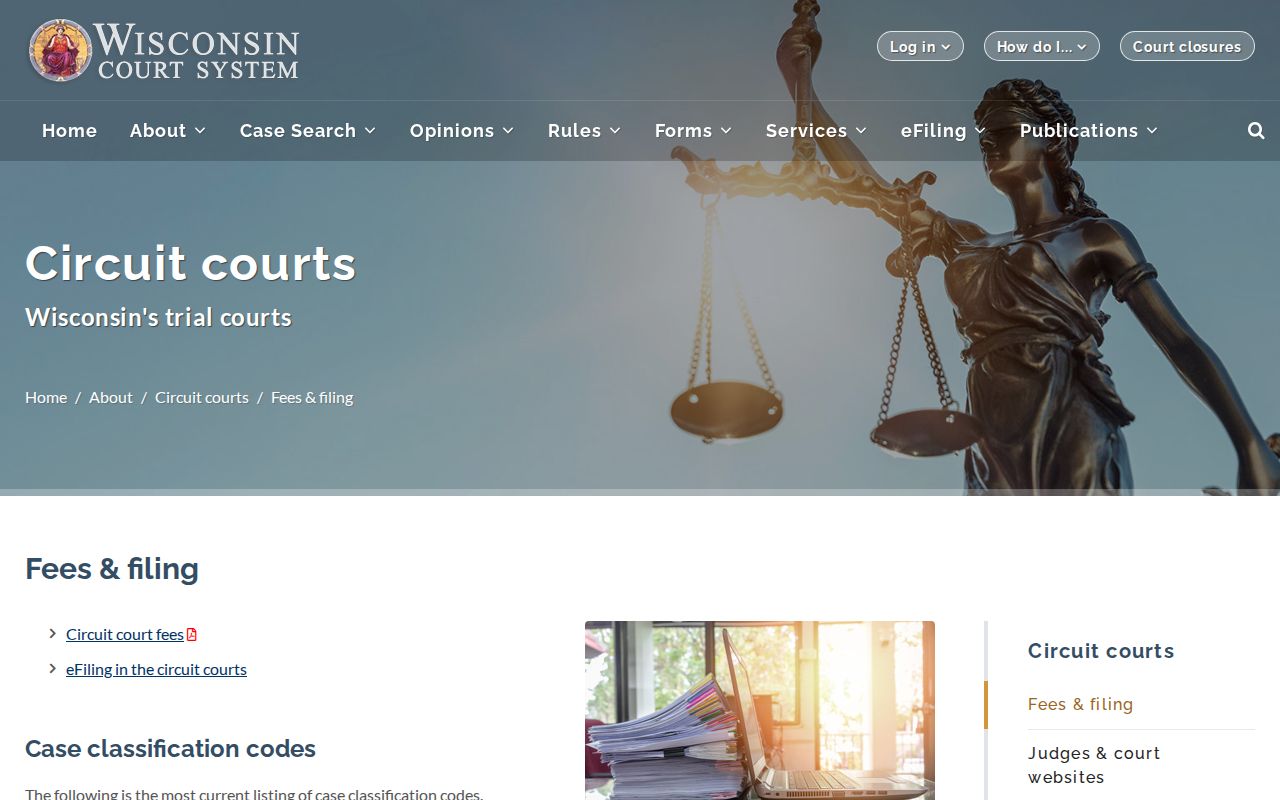
That state table settles it when a Dane civil record carries a code its caption does not explain.
Inside a Dane County Civil Docket
The top of a Dane County civil docket gives the case number, class, filing date, branch, and judge. Parties appear below it by role. Plaintiffs or petitioners come first; defendants or respondents follow. Later entries track service, an answer, motions, conferences, and hearings. Trial, orders, judgment, costs, and current status come after. The caption, built from those party labels, is the case title.
| Case identity | Number such as 2024-CV-#####, class, filing date, and branch. |
|---|---|
| Parties | Plaintiff, defendant, petitioner, respondent, or another stated role. |
| Procedure | Service, answer, motion, conference, hearing, or trial event. |
| Filed items | Descriptions of complaints, motions, orders, and other papers. |
| Result | Disposition, judgment, costs, and current public status. |
A register line is not the paper itself. WCCA posts no document images for the public. The complaint, answer, exhibit, transcript, settlement, or signed order stays in the clerk's file until you request it.
Dane County Civil Docket Counts
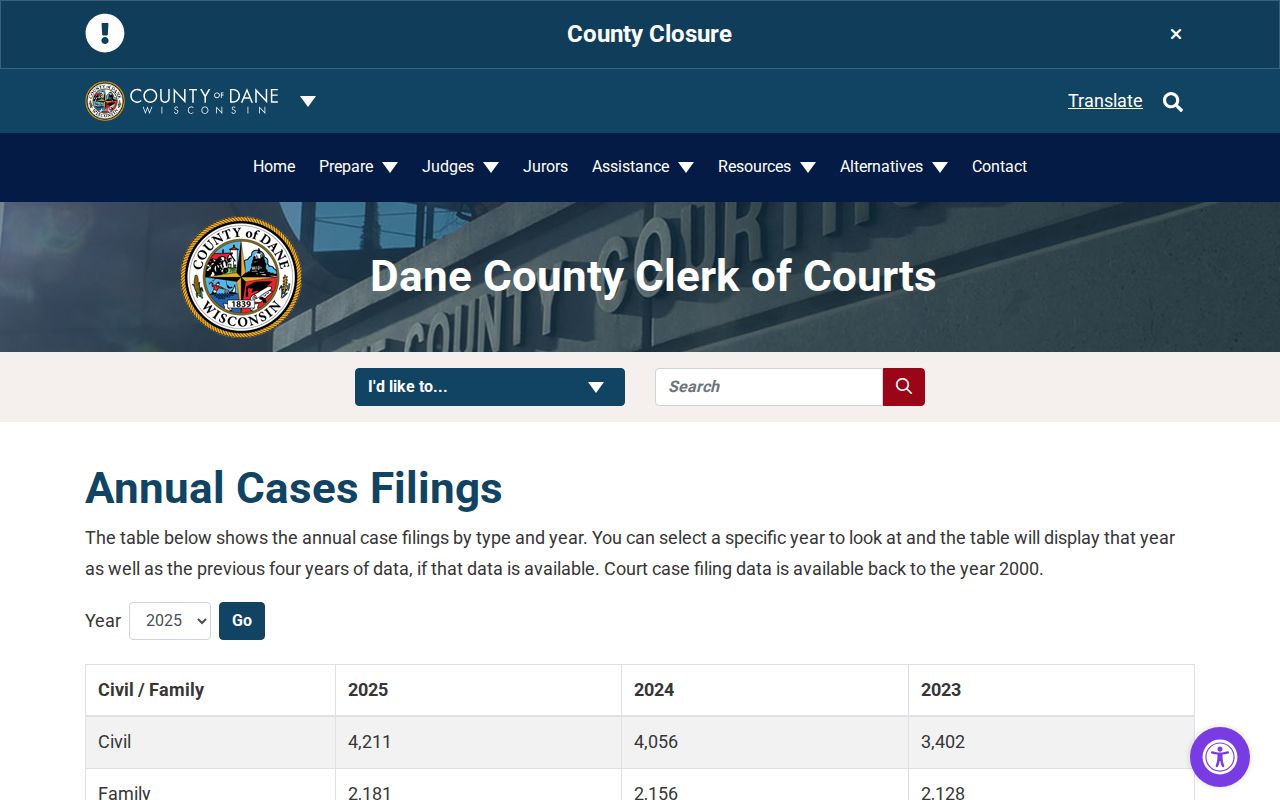
The Dane County 2024 annual table reported 4,056 civil cases. Family cases came to 2,156 and paternity to 538. Together that is 6,750. Small claims stood apart at 6,559, probate at 1,976, and juvenile at 790. These are category totals. They count neither unique parties nor pending cases, wins, or judgments.
The mix shows that civil is not one uniform docket. Find the actual class before applying a general civil process to an eviction, family, probate, or guardianship record. The current Dane County annual case-count page gives the newer figures and their context.
A shifting county total says nothing about the event history inside one civil case.
Civil Case Types on the Docket
Dane County Circuit Court handles the county's civil matters, not a justice-of-the-peace court. Small claims belongs to Wisconsin circuit court too. The broad civil side also holds claims that run on very different procedures and calendars.
- Contract, debt, money judgment, and garnishment matters.
- Personal injury, property damage, and other tort claims.
- Foreclosure, condemnation, and other real-estate disputes.
- Divorce, support, paternity, and other family proceedings.
- Small claims, eviction, replevin, and limited money claims.
- Probate, guardianship, commitment, adoption, and liens.
A municipal judgment appeal can land in circuit court under a civil classification. It began in municipal court. Foreclosure, eviction, and replevin each carry different codes and scheduling paths. So rely on the case class. A familiar word in the caption is a weaker routing clue.
Dane County Civil Court Orders
A docket entry may show an order, judgment, or motion filed with no image attached. That is normal on WCCA. Copy the case number, entry date, and exact docket description first. Then ask the Dane Record Center for that one item instead of the whole file. A narrow request cuts ambiguity and may cut copy cost.
Dane charges $1.25 per page for copies. Certification costs $5. Exemplification is $15 plus page copies. Searching a name with no case number costs $5 per name. Estimated requests above $5 may require prepayment. Certification means the clerk compares the copy and stamps it true to the original. A browser printout from WCCA earns no such status.
Docket event versus document: use WCCA to identify the entry; use the clerk to obtain the complaint, signed order, judgment, or certified copy.
Civil Docket Settings and Hearings
A Dane County civil docket can list many kinds of events. Status conferences, pretrials, motion hearings, and trials all show up on it. Eviction events, commissioner hearings, and judgment dates do too. Read each entry together with its assigned branch. The room, the judge or commissioner, the event type, and its status matter just as much. For the wider calendar, the Dane County court dates resource helps. The official Dane Judges page also posts links to weekly branch calendars.
Treat a WCCA event as a hint, not a full notice. It may leave out whether a hearing is remote. A hearing can also be continued, resolved, or struck from the calendar. Dane's setover practice has a timing rule. The request must be made at least five working days before the hearing, after trying to learn the other parties' positions. Without a new notice from the court, the original date still controls. For settings that matter, confirm with the branch or the clerk. Note also that Eviction Court and commissioner calendars may run on a separate channel. The assigned judge's weekly list is not the whole picture.
Dane County Civil Docket Timeline
A civil docket reads like a timeline. A complaint or petition opens the case. Service then records that the initiating papers were delivered. An answer or response may come in next. Motions may ask the court for specific action. Conferences then manage progress, discovery, settlement, and trial needs. Hearings or a trial push the case forward. The result may be an order, a dismissal, or a judgment. Later entries can deal with costs, satisfaction, enforcement, appeal, or reopening.
Docket flow: Filing › Service › Answer › Motion or Conference › Hearing or Trial › Order or Judgment
Real cases rarely follow that script exactly. Events get skipped, repeated, or reordered. A default judgment may be entered when a party fails to respond or appear, where the law permits it. Still, a judgment entry is not a satisfaction, a lien release, or a certified judgment, so read the current status and ask the clerk for the exact legal document you need.
Dane County Civil eFiling Records
Wisconsin Court System eFiling serves authorized attorneys and parties who file documents. It is not the public docket search. A filing made there can produce a later WCCA register entry. But an eFiling login is not how the public does ordinary case research.
The rollout of mandatory circuit eFiling began in 2017. It reached its final county group in 2019. By 2023 the system was handling real volume. It processed 8.9 million documents that year according to an official court update. September 2025 brought two-factor authentication to eCourts applications, eFiling included. These changes affect filing security and workflow. They did not turn WCCA into a public archive of document images.
Civil Docket Access Rules
Public access has limits. Not every civil fact or paper shows up online. Family, paternity, guardianship, commitment, adoption, juvenile, termination-of-parental-rights, and protective-order matters can hold restricted or redacted information. Sealed items may be coded, limited, or simply absent. Never infer an outcome or reconstruct private facts from a gap in the docket.
When you hit a restricted entry, sort out what you actually need. Is it a public register line or the underlying document? Then contact the Dane Record Center with a narrow request. Juvenile access goes through official forms, identification, and judge review. The clerk applies the rules on confidentiality, sealing, redaction, and retention. Each request is weighed as it comes.
Key rules:
Wis. Stat. §19.35 governs Wisconsin public-record requests subject to exemptions, procedure, and fees.
SCR Chapter 72 governs court-record retention and expunction handling.
Wisconsin's public-access FAQ explains WCCA redaction and the lack of public document images.
When an official civil judgment or order is what you need, ask the clerk for certification. The public docket orients you; it does not replace the maintained court file.